Showing posts with label plant. Show all posts

How-To Successfully Re-pot Aloe Vera Plants

Homiful.com -- The aloevera plant is one type that is known to be very easy to care for. However, it also requires a bit of regular maintenance, from routine watering, inspection, and re-potting when necessary. Learn how to carefully transplant it to a new container, giving it enough space for growth by repotting the aloe vera. Follow these tips, How-To Successfully Re-pot Aloe Vera Plants to ensure a healthy and vibrant aloe vera plant that will beautify your space.


Prepare the New Pot

@tiakirby

Here is how to move an aloe vera plant. Before repotting the aloe vera, prepare a new pot by filling it with some fresh potting soil. Make sure the soil has good drainage, as aloe vera plants do not like to be in waterlogged soil. Leave a little space at the top to accommodate the roots of the plant. 

If you don't know about good soil for potting aloe vera. Choose a commercially available potting mix for succulents and add extra sand or perlite.


Remove the Plant from its Current Pot

@plant_vitamins

After choosing a suitable pot, start by picking up the plant. Carefully remove the aloe vera plant from its pot by turning the pot upside down and supporting the base of the plant with your hand. Tap the sides of the pot or squeeze it gently to loosen the soil. Lift the pot slowly, and the plant will slide out with its roots still intact.


Inspect and Untangle the Roots

@afixofgreen

Once the aloe vera plant is removed from its pot, it is better to take a closer look at the roots. Carefully remove any roots that are wrapped around or swirling around the root ball. This will help the roots spread out and place themselves in the new pot more easily while repotting the aloe vera.


Place the Aloe Plant in the New Pot

@wildgrowth_

After checking the roots, you can start transplanting it into a new pot. Place the aloe vera plant into the new pot, positioning it in the center. Adjust the soil level so that the top of the root ball is slightly below the rim of the pot. Add or remove soil as necessary to reach the right height. 

When repotting a long aloe vera stem, take care to support the stem and ensure it remains upright during the transplanting process. Fill the gap between the root ball and the pot wall with new potting soil. Press the soil down gently, making sure there are no air pockets. Leave a little space at the top for easy watering.


Watering the Aloevera

Balconygardenweb

Once the re-potting is complete, water your aloe vera plant thoroughly. Let the water soak into the soil until it starts flowing out of the bottom of the pot. This helps to settle the soil and provide moisture to the newly transplanted aloe when repotting the aloe. 

For the next time, you can start using the scheduled watering that you usually do. After all, aloevera does not require a lot of water, which is why the plant is very easy to care for.


Place in a Suitable Location, Monitor and Care for Your Aloe Plant

Balconygardenweb

Aloe vera plants thrive in bright, indirect light, so place them near a sunny window or in a well-lit area. Avoid exposing it to harsh direct sunlight, as it can burn the leaves. Pay close attention to aloe vera plants that are replanted in the following weeks. 

Water only if the aboveground part feels dry, as excessive watering can cause root rot. Fertilize occasionally with a balanced, water-soluble fertilizer to support its growth. Aloe vera plants generally require repotting every 1 to 2 years to ensure their optimal growth and health.


Like this article? Don't forget to share and leave your thumbs up to keep support us. Stay tuned for more interesting articles from us in the future!

For those of you looking for a minimalist home design that ranges from simple to modern. Please leave your message and comments on Home Lovers on Facebook.


This article should be useful for those of you looking for design ideas and house plans.

Hopefully, you will find it easier to create your ideal home.

Don't forget to share it with your friends and family so that it can help others.


Author        : Rieka

Editor        : Munawaroh

Source        : Various sources


Homiful.com is a collection of minimalist home designs and floor plans ranging from simple to modern. There are also several home decorating tips and tricks in various themes. Our main theme is the design and layout of the house, as well as the inspiration for the living room, bedroom, family room, bathroom, house prayer room, house terrace, and child's bedroom.

7 Easy Houseplant That Anyone Can Keep Alive

Homiful.com -- There are many houseplants that can withstand almost any condition. The greatest simple and low-maintenance plants are ideal for anybody looking to get their feet wet but worries about dying (yet another) houseplant. Find the suitable plants in the 7 Easy Houseplants That Anyone Can Keep Alive list below!


Golden Pothos

@airstarfoliage

Golden pothos is one of the most forgiving plants known; give this vining beauty plenty of light and it will grow fast. However, it is also quite tolerant of low light levels, making it an ideal plant for beginners. Water when the top a few inches of soil are dry.


ZZ Plant

@bloomspace.co

This ZZ plant is hardy and simple, requiring just low to bright indirect light. Make things easy, even for beginners. It also doesn't mind missing a watering and loves to be mostly dry before getting a big, long drink.


Boston Fern

@colasantifarms

Boston fern requires more humidity than sunshine, making it an ideal plant for bathrooms or kitchens. That's why it's often hanging on Southern front porches, when the light is low and the air is humid and warm. Spray it with a mist in between waterings to keep it look fresh.


Kalanchoe Flapjack

@her_succulent_royalty

This succulent's bite-sized leaves resemble pancakes, which means its pleasant name. However, it is not always a small stack, as it can grow to be more than 12 inches tall. Direct sunlight helps to bring out the lovely pinkish-red pigments on the margins of the leaves.


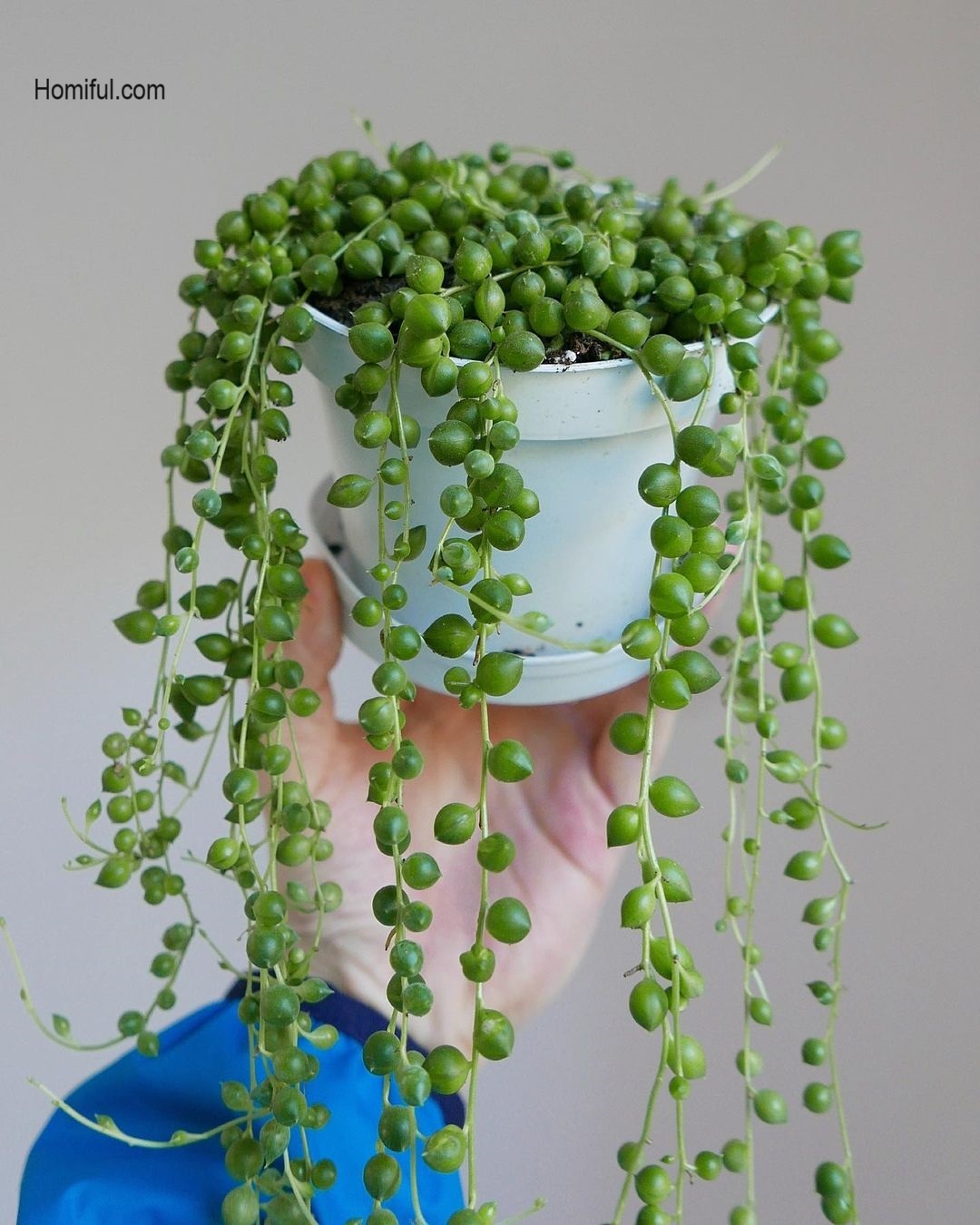
String of Pearls

@indoorgardenbymarco

With such a lovely name, how could you not buy it? This succulent, which resembles an exquisite string of pearls, grows quickly when given enough of light. Place it in bright, indirect light and water when the top few inches of soil appear dry.


Aloe Vera

@plantsyoulove

This attractive succulent requires almost no maintenance. Give it bright, indirect light and water once or twice a week when it is mostly dry. The gel-like substance hidden inside each leaf can help treat minor burns (tear off an outer leaf to use).


Cuddly Cactus

@urbangardenerto

Last but not least, the easiest plant to take care of is definitely the cactus! This little cactus is drought-tolerant and loves the sun, living true to its name. Unlike most of its siblings, it lacks sharp spines, making it perfect for homes with curious kids and pets.


Like this article? Don't forget to share and leave your thumbs up to keep support us. Stay tuned for more interesting articles from us in the future!

For those of you looking for a minimalist home design that ranges from simple to modern. Please leave your message and comments on Home Lovers on Facebook.


This article should be useful for those of you looking for design ideas and house plans.

Hopefully, you will find it easier to create your ideal home.

Don't forget to share it with your friends and family so that it can help others.


Author        : Rieka

Editor        : Munawaroh

Source        : Various sources


Homiful.com is a collection of minimalist home designs and floor plans ranging from simple to modern. There are also several home decorating tips and tricks in various themes. Our main theme is the design and layout of the house, as well as the inspiration for the living room, bedroom, family room, bathroom, house prayer room, house terrace, and child's bedroom.

Benefits of the Lucky Bamboo Plant

Benefits of the Lucky Bamboo Plant 

Homiful.com -- Lucky bamboo is one of the most popular gift plants, did you know that this beautiful plant also has many other benefits? Lucky Bamboo is a tropical plant known as dracaena sanderiana rather than a true bamboo. In China, this plant is considered a sign of good fortune and wealth. This plant has also gained popularity in Western culture, with some people taking it into their daily lives and using it in fields like as martial arts, tai chi, and yoga. Let's find all the benefits of the lucky bamboo plant below!


Low Maintenance

@plant_installations

Lucky Bamboo is a very popular indoor plant. The plant requires little maintenance; it does not require direct sunshine and may thrive in indirect light as well. Besides, you may just water it when the soil is dry. That is why this plant is ideal as a gift.


Room Decoration

@organizing_home

Because the plant requires little maintenance, it is ideal for use as an office or houseplant. Lucky Bamboo also comes in lovely pots and makes an excellent item of decor. Furthermore, the plant represents prosperity and is in high demand around New Year's and other religious festivals.


Aquarium Plant

@ohiotropics

Lucky Bamboo provides air and oxygen to aquarium water, which is beneficial to the fish. Usually, the plant thrives when its leaves are out of the water, the plant may be grown in water even if it is not in an aquarium. So easy to propagate!


Vary in Size

@kingsplantbarnnz

The plant comes in a variety of sizes, and you may choose one based on your needs. You may purchase a large plant for your living room, a medium one for your dining table, and a little lucky bamboo for your workplace desk!


Part of the Feng Shui

@dana_turdean

Feng Shui is a way of maintain peace. People all over cultures believe in good energy. The Lucky Bamboo Plant has been utilized for hundreds of years to boost happiness, well-being, safety, and balance. 


Cultural Importance According to Feng Shui

@abc.garden

Bamboo plants, in Chinese culture, represent prosperity and longevity. Feng Shui consists of five primary elements: earth, water, wood, fire, and metal. When you plant lucky bamboo in a ceramic container with a metal trim and a red ribbon, it shows all five elements together. The value of the plant also varies by how many of its stems:

- Two stalks of the plant represent love.

- Three stalks represent happiness, called Fu. Wealth called Lu, and long life called as Soh.

- If the plant has five stalks, then it represents the five major areas – Intuitive, Emotional, Spiritual, Physical, and Mental.

- Six stalks of the plant represent money and luck.

- If you have lucky bamboo that has seven stalks, it represents good health for the entire family.

- Eight stalks represent personal or business growth.

- Nine stalks represent luck of a great kind.

- If you are someone who loves perfection, a lucky bamboo, with ten stalks, represents the same!

- 21 stalks, though not common, represent a powerful blessing.

The number four is associated with death in Chinese culture. So, you'll never find a lucky bamboo plant with four stalks. Gifting someone can also considered offensive and impolite.


Like this article? Don't forget to share and leave your thumbs up to keep support us. Stay tuned for more interesting articles from us in the future!

For those of you looking for a minimalist home design that ranges from simple to modern. Please leave your message and comments on Home Lovers on Facebook.


This article should be useful for those of you looking for design ideas and house plans.

Hopefully, you will find it easier to create your ideal home.

Don't forget to share it with your friends and family so that it can help others.


Author        : Rieka

Editor        : Munawaroh

Source        : Various sources


Homiful.com is a collection of minimalist home designs and floor plans ranging from simple to modern. There are also several home decorating tips and tricks in various themes. Our main theme is the design and layout of the house, as well as the inspiration for the living room, bedroom, family room, bathroom, house prayer room, house terrace, and child's bedroom.

Pro Tips Pruning Philodendron For Bushier and Fast Growth

Pro Tips Pruning Philodendron For Bushier and Fast Growth 

Homiful.com -- Philodendron is one of the most popular types of ornamental plants. Philodendro itself has many variants. Pruning philodendron frequently is important to keep its tropical charm and preventing it from growing lanky or massive for its space. This Pro Tips Pruning Philodendron For Bushier and Fast Growth below can help you to maintain your philo beautifully!


Why Prune Your Philodendron?

@amandaandtheplants

Pruning may not be vital to the health of this houseplant, but it does assist keep taller varieties from looks spindly and unbalanced. If your philodendron is taking up too much space or has lengthy, stunted, or lanky growth, you might consider trimming it. 


When is the Right Time to Prune?

@fernmnl

Pruning philodendrons is best done in the spring and early summer, although early fall is also a suitable time for periodic pruning. Light trimming is fine at any time of year, but it is especially useful for removing yellowing leaves and sick or damaged growth.


How To Prune

@freakyfrydek

1. Begin by shaping the longest stems (if they are growing everywhere and not in the shape or direction you prefer) just above the node. This not only keeps the plant in shape, but also helps it to grow extra stems sideways, making it bushier.

2. Trim any leaves or stems that are yellow, damaged, brown, or sick. This step is essential for keeping the plant healthy.

3. Let young plants to grow and branch out before trimming them. This will prevent disruption in the growth cycle, which can be key at the early stages of plant growth.


Some Tips

@happy_little_houseplant

Pruning is not the same as grabbing scissors and cutting the plant anywhere. No! It is an art that must be learned if you want to optimize your plants! 

When pruning keep cut growth and choose healthy 5-6 inch long cuttings. Cut the stems below the leaf nodes, remove the lower leaves, and plant in new pots or, more likely, the same pots as the mother plant. In this way, each time you trim the parent plant, you'll get a new set of plants!


After Pruning 

@unplantparenthood

- Keep the soil moist but not flooded to avoid stress.

- Add a thin layer of mulch to keep the soil moist reduce weeds, and regulate temperature.

- Allow the plant to rest for a week before giving a balanced liquid fertilizer diluted to 1/4 of its original strength.

- Avoid exposing the plant to direct sunlight for at least 7-8 days. After then, 3-4 hours of early sunshine, followed by indirect light throughout the day, will be ideal!


Like this article? Don't forget to share and leave your thumbs up to keep support us. Stay tuned for more interesting articles from us in the future!

For those of you looking for a minimalist home design that ranges from simple to modern. Please leave your message and comments on Home Lovers on Facebook.


This article should be useful for those of you looking for design ideas and house plans.

Hopefully, you will find it easier to create your ideal home.

Don't forget to share it with your friends and family so that it can help others.


Author        : Rieka

Editor        : Munawaroh

Source        : Various sources


Homiful.com is a collection of minimalist home designs and floor plans ranging from simple to modern. There are also several home decorating tips and tricks in various themes. Our main theme is the design and layout of the house, as well as the inspiration for the living room, bedroom, family room, bathroom, house prayer room, house terrace, and child's bedroom.

Fast-Growing 7 Houseplants That Look Bushier and Lush

Fast-Growing 7 Houseplants That Look Bushier and Lush 

Homiful.com -- If you like to enjoy a tropical feel indoors but don't want to wait too long, don't worry. We have some amazing plants that will grow quick. Fast-Growing 7 Houseplants That Look Bushier and Lush can give you that forest-like vibe in no time!


Peace Lily

@beardsanddaisies

The Peace Lily is popular for its lush, deep green leaves and stunning white flowers. This plant leaves grow directly from the soil and multiply fast. This plant requires little maintenance, water regularly, if the leaves look droopy it means the peace lily is thirsty.


Monstera adansonii

@bgsplants

One of the monstera variants with leaves that are quite small compared to other types. This vine is also quite popular with its slit leaves. Swiss Cheese Vine is a fast-growing vining plant whose bushy look adds a touch of nature to your indoor garden.


Philodendron

@happy_little_houseplant

Philodendron is one of those houseplants that is known for being easy to care for and fast growing! Heart leaf Philo must be your first choice for becoming lush and growing quickly! Its fast growth and cascading vines will give character to hanging baskets.


Fiddle Leaf Fig

@hiltoncarter

The Fiddle Leaf Fig can be one of the more standout choices out of all the houseplants on this list. The Fiddle Leaf Fig is another unusual treasure! Its huge leaves quickly provide a foresty feel to any area, and the size of it makes it look larger than it is.


Senecio macroglossus (Natal Ivy)

@phoolbiruwa

Different from other vines, Natal ivy has a unique and attractive leaf shape with a two-tone color. Natal Ivy, with its emerald green leaves and trailing growth, is an easy and fast way to add lushness to your indoor gardens.


Spider Plant

@plantsgardensadventures

Who doesn't know this plant? Spider plants are the most popular ornamental plants because they are easy to care for even for beginners. The Spider Plant, with its arching green and white striped leaves, grows quickly! You can also fast propagate it from its pup, producing a small ecosystem of its own!


Golden Pothos

@vescabotanicals

Looks similar to philodendron, golden pothos is also one of the most popular creeping houseplants! When it comes to fast growth, Golden Pothos is supreme! It also requires little maintenance and performs well in low light conditions.


Like this article? Don't forget to share and leave your thumbs up to keep support us. Stay tuned for more interesting articles from us in the future!

For those of you looking for a minimalist home design that ranges from simple to modern. Please leave your message and comments on Home Lovers on Facebook.


This article should be useful for those of you looking for design ideas and house plans.

Hopefully, you will find it easier to create your ideal home.

Don't forget to share it with your friends and family so that it can help others.


Author        : Rieka

Editor        : Munawaroh

Source        : Various sources


Homiful.com is a collection of minimalist home designs and floor plans ranging from simple to modern. There are also several home decorating tips and tricks in various themes. Our main theme is the design and layout of the house, as well as the inspiration for the living room, bedroom, family room, bathroom, house prayer room, house terrace, and child's bedroom.
How to Propagate Begonias & 5 Best Ways

How to Propagate Begonias & 5 Best Ways  

Homiful.com -- Begonias are attractive perennials that often appear in bedding, pot, and hanging basket displays. They have a reputation for being a touch old-fashioned. Some have lots of long-lasting, beautiful blooms in neon tones that look fantastic in pots and hanging baskets, while others are bred for their stunning, eye-catching leaves.

Propagating begonias is a satisfying and cost-effective method to expand your collection. This article will show you the finest and simplest methods to propagate begonias so you may have more of these beautiful plants in your garden or indoor area.


Stem Cuttings Propagation

@_momomii_

Propagation with the stem cutting method is the first idea you can try. Here is the steps:

- Select a healthy begonia plant with strong, healthy stems. Remove any leaves from the lower half of the cutting, leaving only a few on top.

- Cut a 4-6-inch stem part below a leaf node using sharp, clean scissors or pruning shears.

- Place the cuttings in a well-draining potting mix. Maintain a regular moisture level in the soil while avoiding wet conditions.

- Cover the cutting with a plastic bag to help with root growth, or set it in a humidity dome. This helps to keep the cutting area humid.

- Once the roots grow in (usually in 2-4 weeks), move the new begonia plant into a larger container or directly into the garden.


Stem Cutting with Water Propagation

@bokkyshome

Apart from planting the cut stems directly in the ground, you can also try propagation using water. After you done with the cutting, place it in a jar filled with nonchlorinated water. Make sure the leaves aren't touching it. 

Keep the jar/vase in a place with both bright and indirect light, with a few hours of morning sunlight. Replace the water every 3-4 days. In 2-4 weeks, the cuttings will sprout roots, at this point you may either continue keeping them in water or transplant them into soil.


Division Propagation

@plantmum2020

This next idea is also one of the most commonly used though rarely discussed. Here are the steps:

- To see the tubers/roots clearly, gently pull the plant out of the pot and shake off any extra soil. Now split them into pieces, making sure each has at least one eye (a little bud).

- To avoid rot, dust the cut surface with fungicide before planting each portion in its own container or straight in the garden. Cover with dirt and water lightly.

- Keep the soil wet until new branches grow. Once the young plants have established themselves, they should be treated as adult begonias.


Seeds Propagation

@begoniatakeaway

Begonia seeds are among the tiniest in the plant world, measuring only 1/300th of an inch (0.085 millimeters) in diameter and easily mistaken for a fine powder. Sowing them may be a difficult process that requires accuracy and attention. Here are the steps:

- Purchase the seeds from an online seller or a garden shop. 

- Scatter the seeds on top of a seed starting mix and water with a spray bottle 2-3 times. This will allow them into the growth media.

- Cover them with plastic wrap and place them in areas with lots of both direct and indirect light. The seeds will begin to grow in 3–6 weeks.


Leaf Cutting Propagation

@beginabegonia

Begonias have many ways to propagate them. Begonia is also one of the plants that can be propagated with its leaves alone, amazing isn't it? Here are the steps:

- Carefully cut a healthy leaf, leaving a little of stem attached. 

- Keep the leaf flat on the growth medium, with a little of stem tucked into the soil.

- Place the pot where it receives enough of indirect light.

- Water just when the top soil seems dry to the touch, using a spray bottle.

- Covering the pot with a plastic bag to produce a humid atmosphere that promotes root growth.

- In a few weeks, you should see new growth sprout from the leaf's base.


Like this article? Don't forget to share and leave your thumbs up to keep support us. Stay tuned for more interesting articles from us in the future!

For those of you looking for a minimalist home design that ranges from simple to modern. Please leave your message and comments on Home Lovers on Facebook.


This article should be useful for those of you looking for design ideas and house plans.

Hopefully, you will find it easier to create your ideal home.

Don't forget to share it with your friends and family so that it can help others.


Author        : Rieka

Editor        : Munawaroh

Source        : Various sources


Homiful.com is a collection of minimalist home designs and floor plans ranging from simple to modern. There are also several home decorating tips and tricks in various themes. Our main theme is the design and layout of the house, as well as the inspiration for the living room, bedroom, family room, bathroom, house prayer room, house terrace, and child's bedroom.

Tips Growing Amaryllis Indoors Easily

Homiful.com -- Amarylis is a popular plant because of its gorgeous flowers. Amaryllis is native to Peru and South Africa. The name comes from the Greek word 'Amarysso,' which meaning 'to sparkle.' They are mostly red and white, but also available in salmon, pink, apricot, rose, and deep burgundy. Scroll down to find out more about Tips Growing Amaryllis Indoors Easily if you've enjoyed reading about it thus far!


Choose Right Container

@mix_garden

A pot about 6-8 inches deep and 4-5 inches broad is enough. To boost the look of its flowers, use elegant ceramic pots! Glass vases and mason jars are also fantastic options! Simply make sure that they are at least 2-3 inches broader than the bulb. Also, remember that containers with drainage holes are preferable, as the amaryllis bulb rots in wet conditions.


The Bulbs

@marliesjetses_keramiek

The amaryllis plant produces two stems from a single bulb, each with four blooms. If you want to have big flowers, got the biggest bulb you can find! You may purchase them online or at a local garden shop or nursery.


Planting

@ellaeske

Plant amaryllis at any time between October and April. Before planting, immerse the bulb in lukewarm water. 3-5 hours would be enough! Fill the pot with compost-rich soil mix and carefully place the bulb in it. Make sure you don't damage any of it in the process.

Pack soil lightly around the bulb, covering it up to its neck but not above. Maintain soil moisture by watering on a regular basis. Do not allow the soil to dry out entirely. Keep the pot in a location that receives both indirect and direct sunlight.


Requirements for Growing Amaryllis Indoors

@dothan.nurseries

Location

Place the pot in an area that receives both direct and indirect sunlight. A window with all-day indirect light and a few hours of gentle morning sun will be an excellent choice, as amaryllis thrives in partial sun.

Soil

Create a light soil mix with two parts loam and one part rotten old manure to avoid damp and soggy conditions. To get the ideal balance of well-drained soil, combine one part sand, one part compost, and one part loam.

Water

Water your indoor amaryllis plant when the top soil is dry. To find out the moisture level in the growth media, use your finger or a moisture meter. Do not let the plant stand in water, as wet soil pushes root rot and attract pests.


Plant Care

@cherylcreagh

Fertilizer

You can fertilize the plant every 3-4 weeks with a balanced liquid fertilizer. Do follow the label's instructions. You may also use a flower booster fertilizer. 

Repotting

When the bulbs begin to outgrow the pot, you will need to repot them. The ideal period is when the plant is dormant. Choose a container that is at least 3 to 4 inches wider than the bulb. Plant only two-thirds of the bulb in the soil.

Pruning & Deadheading

After flowering, use gardening shears or scissors to remove the old flowers off the stalk. Also, trim the drooping stems to the top of the bulb.

Pest & Disease

Checking the bulbs carefully when buying may lessen the chance of infection. Red blotches can have an impact on both health and looks.


Cut Amaryllis Flowers

@mslagerfelt

- Use a sharp knife to cut the flowers at a 45-degree angle. Place the stalk upside down, then fill the hollow stems with water. Cover the opening with cotton.

- Get a clean vase, fill it with water, and add the flowers. You may also put cut-flower food in there.

- Change the water in the stem and vase every 2-3 days.

- With careful care, the flowers can stay for 7-10 days.


Amaryllis Varieties

@plants_flowersandnectar

- Samba, This stunning variety offers ruffled red flowers with white markings and borders. It can reach up to 18-22 inches tall.

- Apple Blossom is a combination of candy pink and snowy white flowers on lime green stems.

- Red Lion, has velvety-red flowers adorned with white stamens.

- Faro, features delicate pale salmon and white flowers.

- Monaco, displays a white-green center on large red flowers.

- Summertime, produces 7-10 inch flowers that color from watermelon pink to deep rose with a green center and cranberry rays.

- Fairy Tale, shows off striped red and white flowers on slender stems.

- Matterhorn, has large snow-white flowers with a yellow-green center.

- Ice Queen, showcases beautiful, furled white flowers with green throats.


Like this article? Don't forget to share and leave your thumbs up to keep support us. Stay tuned for more interesting articles from us in the future!

For those of you looking for a minimalist home design that ranges from simple to modern. Please leave your message and comments on Home Lovers on Facebook.


This article should be useful for those of you looking for design ideas and house plans.

Hopefully, you will find it easier to create your ideal home.

Don't forget to share it with your friends and family so that it can help others.


Author        : Rieka

Editor        : Munawaroh

Source        : Various sources


Homiful.com is a collection of minimalist home designs and floor plans ranging from simple to modern. There are also several home decorating tips and tricks in various themes. Our main theme is the design and layout of the house, as well as the inspiration for the living room, bedroom, family room, bathroom, house prayer room, house terrace, and child's bedroom.